10 other uses of a book cover roll at home, school and office
Leftover book cover roll? Ten practical uses at home, school and office, from shelf lining to chart covers and craft, and which roll suits which job.
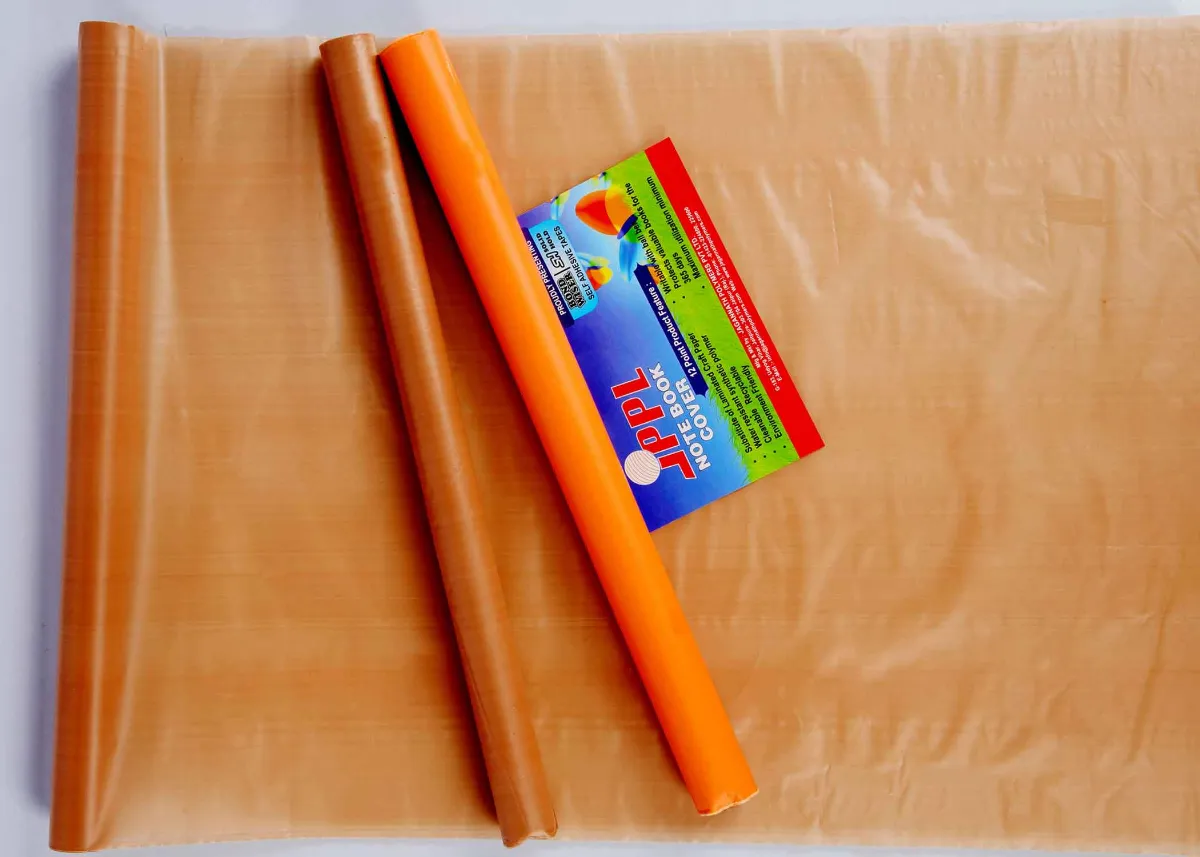
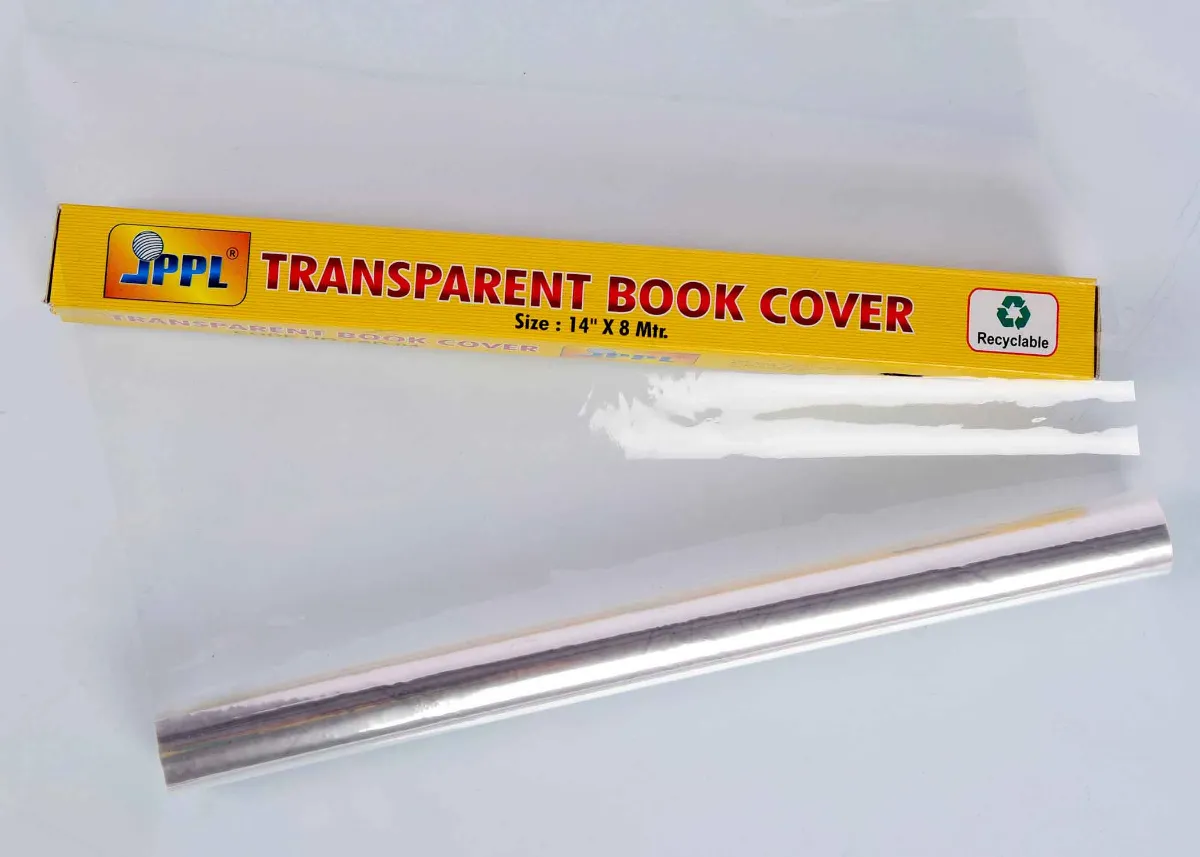
A book cover roll is simply a long, clean sheet of plastic film. Anything that needs a wipeable or see-through layer can use it: shelves and drawers, files and registers, charts on the wall, school projects and craft. After the books are covered, there is often half a roll left in a cupboard. Here are ten good ways to use it.
None of them needs anything more than scissors and a little tape.
I am writing this as the maker of these rolls, at Jagannath Polymers Pvt Ltd (JPPL), so let me be clear on one point first. Everything below is a practical household use, not a promise that the film was designed or tested for that job. Use your own judgement, and keep the two warnings at the end in mind.
At home
1. Line shelves and drawers
This is the second use I like best. Cut a piece to the size of the shelf, lay it flat and fix the corners with a small piece of tape if it slides. When it gets dirty, wipe it with a damp cloth, or lift it out and replace it.
We make plain synthetic covers in white and light colours, and they look neat inside a wardrobe. Standard natural film is cheaper and shows the wood underneath. On a kitchen shelf, the film can go under jars and boxes, but keep it away from loose food.
2. Make a wipeable table cover for craft and homework
Children and glue, paint or clay on the dining table... you know how that ends.
The table loses. Tape a length of cover film over the table before they start. Afterwards, wipe it or throw the piece away. A 19 inch wide cover covers more table in one piece.
3. Wrap a small gift for a child
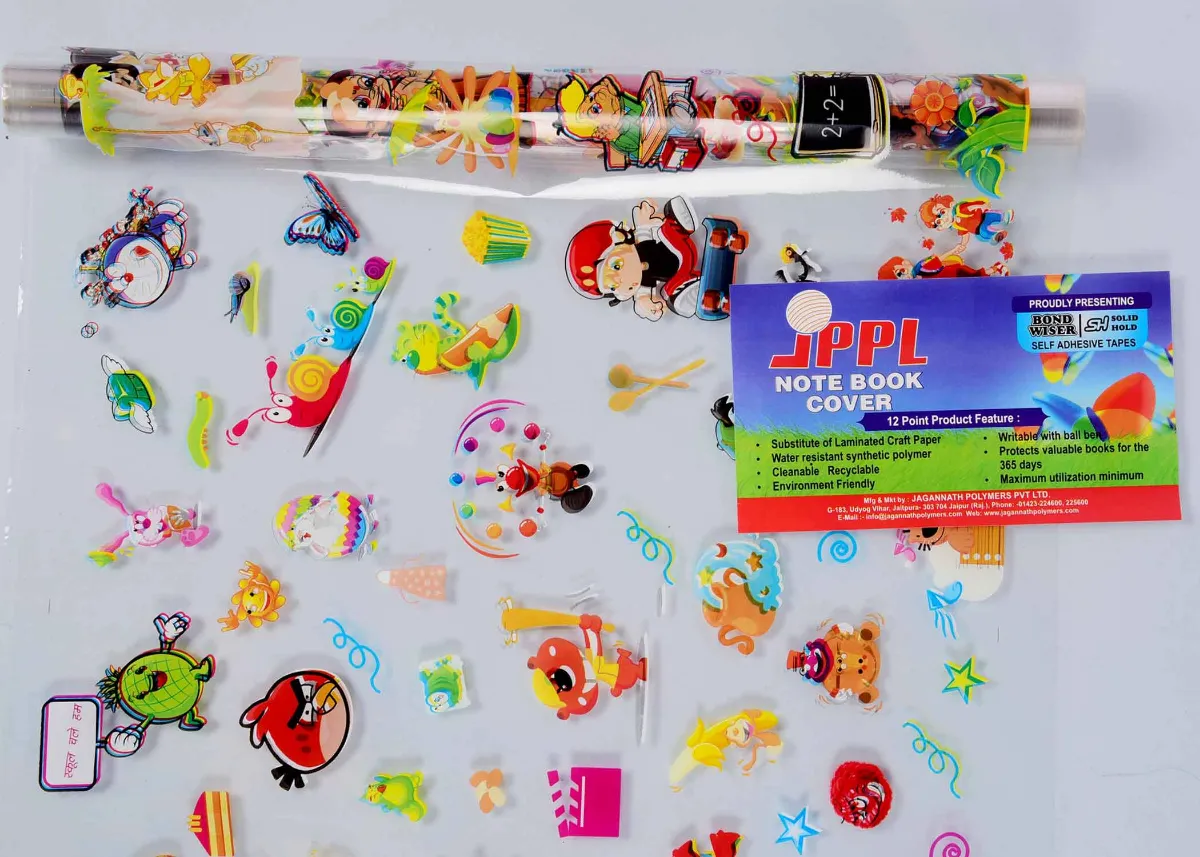
Our printed covers, like Classic with cartoon prints on clear film and Combo with prints on colours, make a cheerful wrap for a birthday return gift or a box of crayons. See the printed range for the designs. Children like peeling the film open almost as much as the gift inside.
At school
4. Protect charts, maps and timetables on the wall
A paper chart on a classroom wall collects dust, hand marks and the odd splash. Lay a sheet of Clear BOPP over it and tape the edges at the back. The chart stays readable through the glossy film. The same works for a timetable stuck inside a cupboard door at home.
5. Windows and coloured glass in school models
Every school project with a cardboard house needs windows.
Cover film makes good ones. Cut clear film a little bigger than the window hole and glue it from the inside. For a temple or a church model with coloured glass, use the see-through fluorescent colours of Floura.
6. Simple colour filters for science class
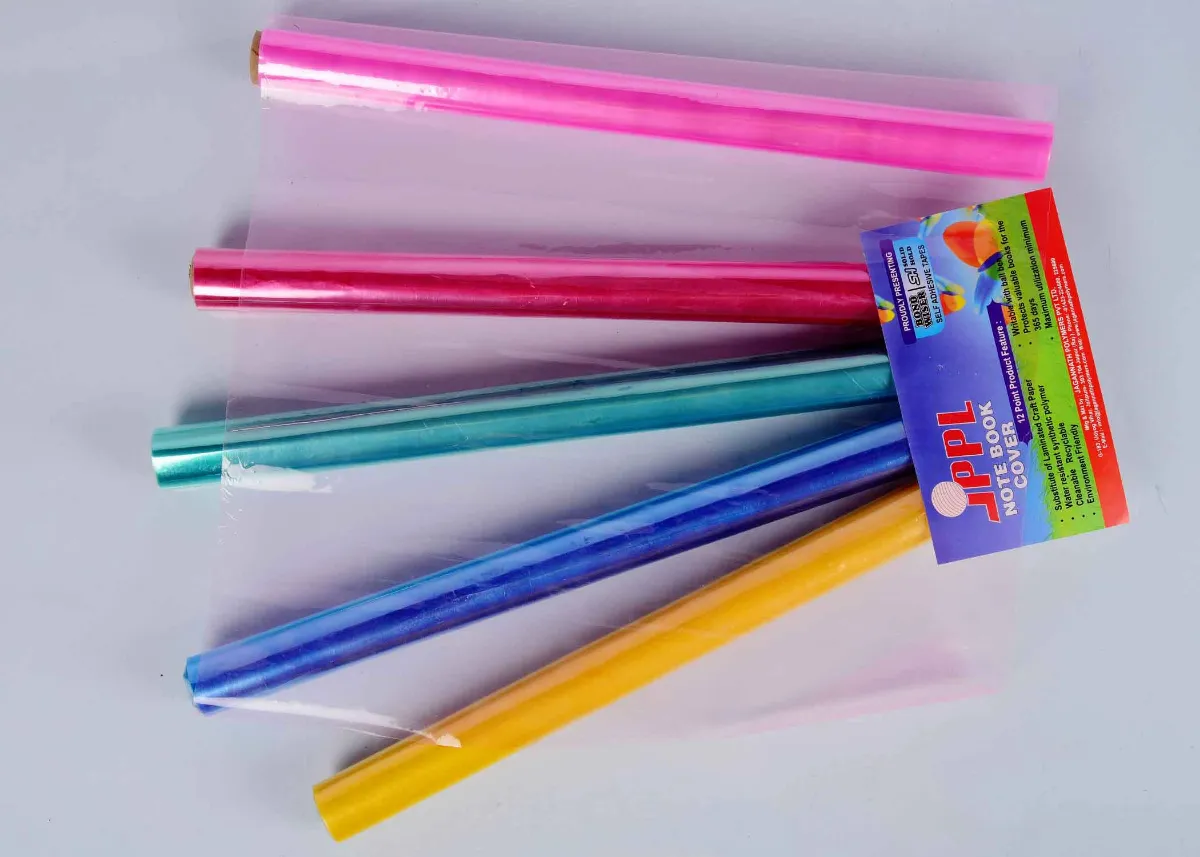
Hold a pink Floura sheet over a torch and the light turns pink. Overlap blue and yellow and see what comes out. It is a cheap way to show children how colour filters work. We make Floura in natural plus up to five fluorescent colours, which is enough for a small experiment.
7. Name cards and labels that last the year
Write a name card, a shelf label or a locker label on paper, then wrap it in a strip of clear film and tape it at the back. It lasts much longer than bare paper in a classroom.
In the office
8. Cover files, registers and diaries
Office registers and account books get handled every day. We make our Supreme covers in 16 and 19 inch for exactly these registers and long books. Cover them the same way you would cover a notebook, as in our guide on how to cover a notebook. Use a different colour for each department or each year, and finding the right register becomes quicker.
9. Keep certificates and documents clean in a folder
Slip a sheet of clear film into a document folder as a top layer over a certificate, so the certificate does not rub against the next page. Do not stick tape on the certificate itself, because tape can damage the paper when you remove it later. Fold the film around a plain card instead, like a sleeve, and keep the tape on the film only.
For festivals and craft
10. Lanterns, stencils and decoration
Floura's fluorescent colours glow nicely when light passes through them. Children can make paper lanterns with Floura panels for Diwali, or window decorations for any festival. Use an LED or electric light inside, never a diya or a candle.
Thick plain covers also make useful stencils for rangoli outlines or wall painting. Draw the shape, cut it out with a cutter, and the stiff film holds its shape through many uses. We make Unique at 75 micron and Student JPPL at 70 micron, our thickest covers, so they work best for this.
Which roll for which job?
| Job | Best roll | Why |
|---|---|---|
| Shelf and drawer lining | Synthetic (HM) or Standard natural | Plain, wipeable, low cost |
| Table cover for craft | Supreme 19 inch or Standard natural | Covers more area in one piece |
| Gift wrap | Classic or Combo | Bright prints |
| Charts, maps, documents | Clear BOPP | Glossy and see-through |
| Models and colour filters | Floura | See-through colours |
| Name cards | Clear BOPP | Shows the writing |
| Registers and files | Supreme 16 or 19 inch | Wide enough for long books |
| Stencils | Unique or Student JPPL | Thickest and stiffest |
Two warnings
- Keep it away from food. These covers are made for books, not for food contact. Under a jar is fine. Wrapped around a roti is not.
- Keep it away from heat. Plastic film softens and melts near a flame, a stove or a hot iron. Never put it inside a lantern with a flame, and never iron it.
Also keep loose film away from very small children, as with any plastic sheet.
We would say the same about any plastic we make.
When you are done with it
Do not burn plastic film, and do not leave it to blow into a drain. Put it out with dry waste for your local collection.
I would rather you use a roll fully than throw half of it away in June. We make these rolls in our own plant, and it makes me happy when a roll does three jobs instead of one.
That is why I like this list. If you are a distributor, share it with the shops you supply. It gives a retailer a useful answer when a parent asks what to do with half a roll.
If you need a few rolls for these jobs rather than cartons, PackSmith, our sister brand, sells a pack of 5 rolls online. If you have found another good use, tell us. I am sure our distributors and their retailers know a few we have not thought of ;)
Questions buyers ask
Can I wrap food in a book cover roll?
No. Book covers are made for books, not for food contact, so do not wrap food in them or line a food tray with them. Under a jar on a kitchen shelf is fine, because the film never touches the food.
Will cover film stick to a shelf on its own?
No. Book cover film has no glue. Cut it to size and lay it flat, or fix the edges with a little clear tape. That also makes it easy to lift and wipe.
Which roll is the stiffest for stencils?
Among our covers, Unique at 75 micron and Student JPPL at 70 micron are the thickest. Thicker film holds a cut shape better than thin film.