Brown cover or transparent cover for school books: which one should you buy?
Brown or transparent book cover? Follow the school list first. If it says nothing, here is when each one makes sense, and what brown cover really means.
Follow the school list. If the list says brown, buy brown. If it says transparent, buy transparent. If it says nothing, I would choose by the book: transparent for printed notebooks and textbooks, and brown (or another plain colour) when you want every book to look the same.
That is the short answer.
The longer one matters, because "brown cover" does not mean the same thing to every parent, teacher and shopkeeper.
Before you read on, one disclosure. At Jagannath Polymers Pvt Ltd (JPPL) we make plastic notebook covers in our own plant, both brown and transparent, and we sell them to stationery distributors and wholesale dealers. We do not make paper covers at all. So read my view with that in mind, and I will be fair to paper where it deserves it.
What does "brown cover" mean on a school list?
For most of us who went to school in India, a brown cover meant brown paper. You bought a sheet from the corner shop, your mother folded it over the book on the dining table, and it lasted till the monsoon.
Today the words have widened. In the stationery market, "brown cover" can mean any of three things:
- Brown paper, the traditional kraft-type sheet.
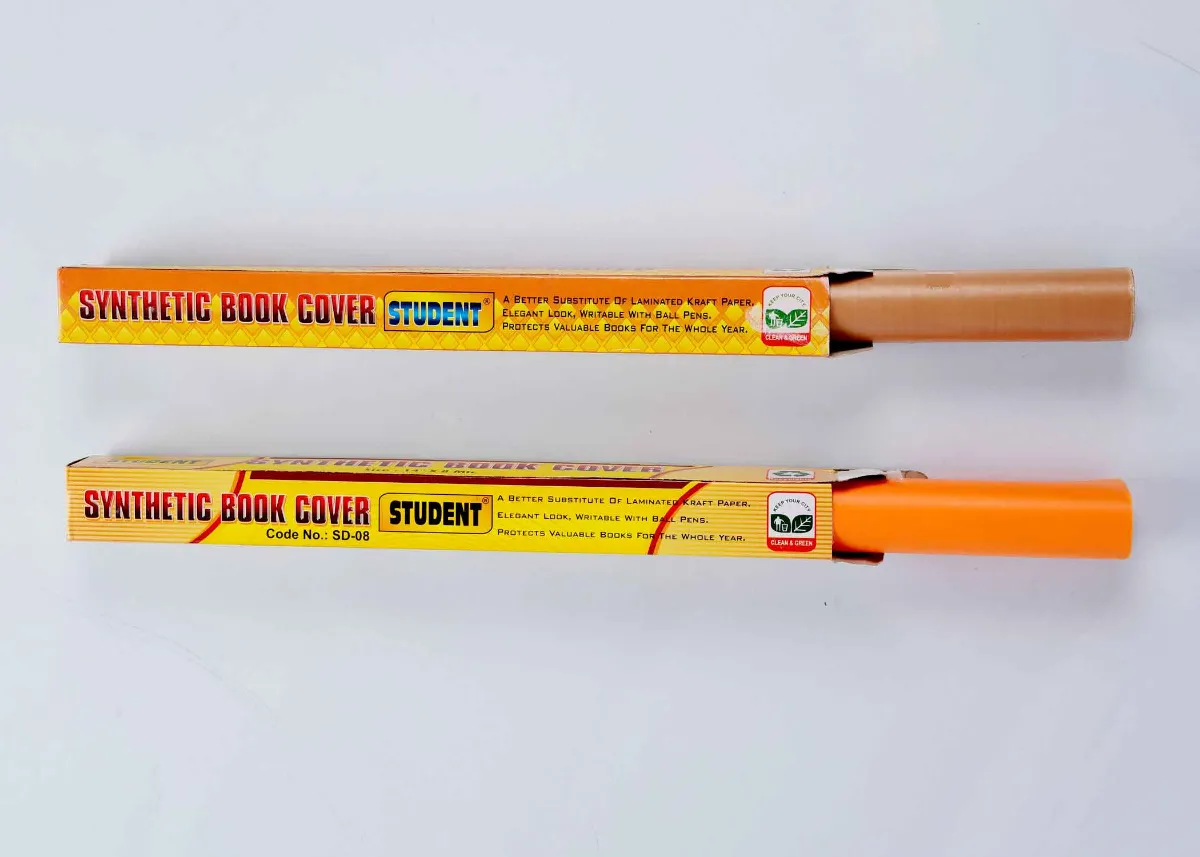
- A brown synthetic cover, i.e. plain coloured HM film. Brown is one of our six standard colours in the synthetic range.
- A brown market roll, like our Standard rolls in jute brown and orange brown, made in 11 and 13 inch.
A teacher who writes "brown cover" may want the paper, or may simply want the colour. Many lists are written once and copied every year, so even the school may not have thought about it. Ask.
If paper is a must, buy paper. If the colour is what matters, a brown plastic cover gives the same look and lasts much longer.
Why do some schools ask for brown covers?
The usual reasons are practical ones.
- A class full of brown books looks neat and uniform, and no child shows off a flashy cartoon print.
- A plain brown surface is a good base for a name label and a subject label.
- It hides a notebook's own cover, which may carry an advertisement or a design the school does not want in class.
- It is the habit. Brown paper was cheap and easy to find for decades, so it became the default.
None of these reasons needs paper as such. They need a plain, dark, uniform cover. That is why plastic brown covers sell well wherever the school accepts them.
When does a transparent cover make more sense?
A transparent cover protects the book and still shows it.
That is the whole point.
- Printed school notebooks. Many schools print their logo, the subject and a name box on the notebook itself. A transparent cover keeps all of that visible for the whole year.
- Textbooks. A child finds the right book by its own front cover, without reading a label.
- Books you want to hand down or resell. You can see the condition of the book through the film, and the book's own cover stays clean underneath.
- Books with a name label already on them. Stick the label first, then cover, and the film keeps the label from rubbing off.
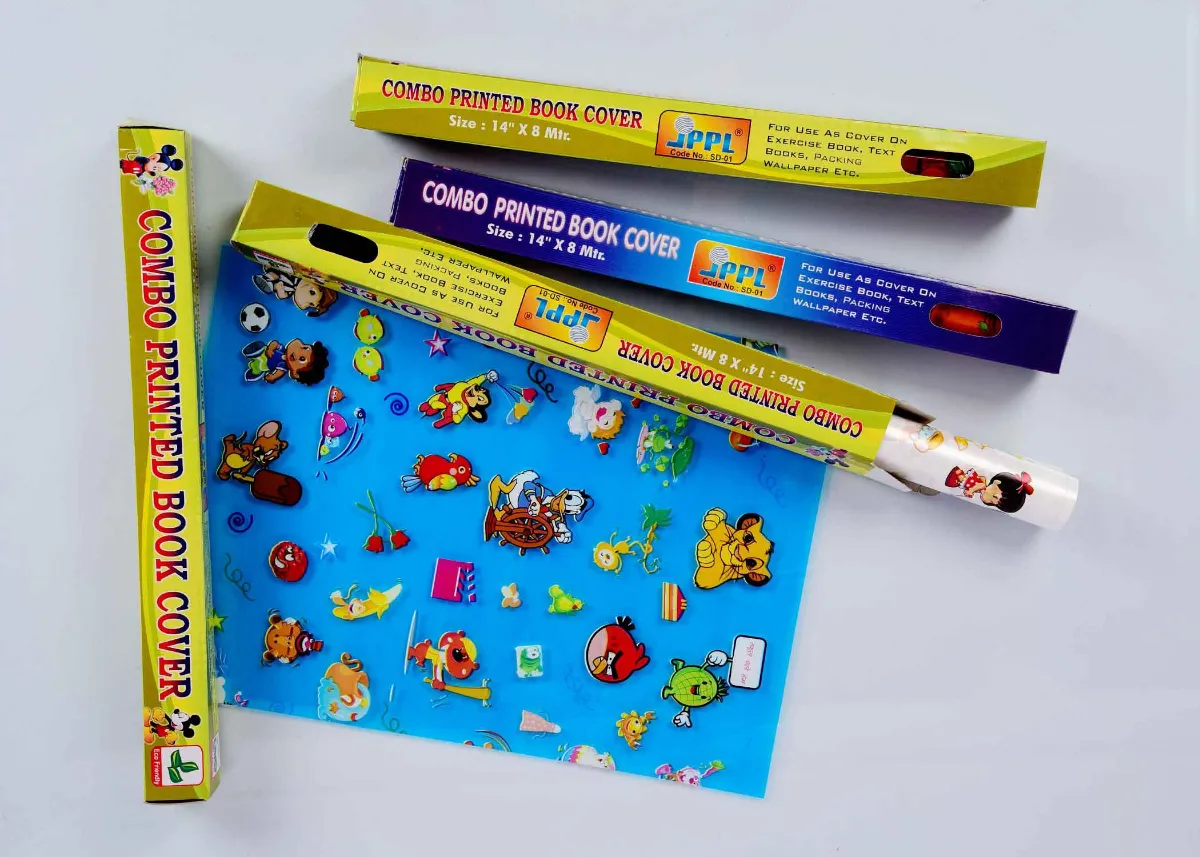
Our transparent options are Clear, which is glossy BOPP, and natural Floura, which is PP with a slightly softer, milky look. For the lowest price, the Standard roll also comes in natural.
Brown or transparent: side by side
| Brown paper | Brown plastic | Transparent plastic | |
|---|---|---|---|
| What you see | Plain brown | Plain brown | The book's own cover |
| Name label | Write directly or stick one | Stick a label on top | Stick the label on the book, then cover |
| Spilt water, dirty hands | Soaks in and stains | Wipes off | Wipes off |
| Torn corners | Common by mid-year | Much less likely | Much less likely |
| Covering again during the year | Often needed | Rarely needed | Rarely needed |
| After use | Goes with paper waste | Plastic, keep it out of drains and burning | Plastic, keep it out of drains and burning |
I have kept paper fair in this table. It is easy to write on, it is familiar, and it goes with the paper waste. Its weak point is life. A child's school bag is a hard place for paper, and a cover that has to be redone in September costs the parent more time and money than the first cover suggested.
Can I put a transparent cover over a brown paper cover?
Yes, and many parents do exactly this. The brown paper gives the school its uniform look. The transparent layer on top keeps the paper clean and stops the corners from tearing.
It has two downsides. It is double the work, and the book becomes a little thicker, which matters when a school bag is already full. If the school accepts a brown plastic cover, one layer does the same job.
Which brown and which transparent should I choose?
Thickness matters more than colour. Every cover we make is 50 micron or thicker, and within that there is a range.
- For a cover that stays stiff on the book through the year, take a thicker synthetic cover. Student JPPL is 70 micron and Unique is 75 micron. Both come in brown.
- For a lower price, Star (50 micron) and Vidhyarthi (55 micron) come in the same standard colours.
- For smaller notebooks on a tight budget, the 11 and 13 inch Standard rolls come in jute brown and orange brown, and in natural.
- For transparent, Clear BOPP is the crisper and more glossy choice. Natural Floura is softer.
Two checks you can do in the shop
- The label test. Take one name label and press it on a small piece of the cover. Lift it after a minute. If it holds, your labels will work on that cover.
- The light test for transparent covers. Hold the sheet up to a tube light. Glossy BOPP looks crystal clear. Natural PP looks slightly milky. Neither is wrong, but choose the one you like before you cover twenty books.
For distributors: make sure your retailers stock both
The school list decides the sale.
Different schools in the same street write different lists. A retailer who keeps only one of the two loses the other half of the customers to the next shop, and the distributor who supplies that retailer loses the same sale.
My suggestion is simple. Keep transparent with your retailers all year, because it suits almost every book. Get brown to them in good depth by February, when the lists start coming. Plan the quantities using our note on when to stock notebook covers. This article is also a fair one to share with the shops you supply, because the "brown or transparent" question reaches their counter first.
One limit, honestly. If a school insists on brown paper, our covers are not the answer, and I would rather tell you that here than sell you the wrong roll.
If you only need a few rolls for your own children, PackSmith, our sister brand, sells a set of 4 boxed rolls online, including a transparent one. If you are a distributor or wholesale dealer, write to us with the colours and widths your retailers need, and we will tell you what fits your market.
Questions buyers ask
The school list says "brown cover". Will a brown plastic cover do?
Usually the colour is what the teacher wants, but only the school can say. Ask the class teacher one simple question, whether it must be brown paper or any brown cover. It takes a minute and saves you from covering every book twice.
Which lasts longer, brown or transparent?
The material decides it, not the colour. A brown paper cover tears at the corners and soaks up water, so most children need a new one during the year. A brown plastic cover and a transparent plastic cover of the same micron last about the same, because they are the same kind of film in a different colour.
Can I write my child's name on a plastic cover?
Yes, but some pens smudge on plastic film, so test your pen on a spare piece first. A self-adhesive name label or a permanent marker is the safer choice. On a transparent cover, the neatest way is to stick the label on the book first and cover it, so the film protects the label.