Notebook cover micron: what the number means and how to check it
What micron means on a notebook cover, the 50 micron floor in India's plastic rules, how thick covers run from 50 to 75 micron, and three ways to check it.
A micron is one-thousandth of a millimetre, so a 50 micron notebook cover is 0.05 mm thick. Fifty micron is also the floor India's plastic rules set for plastic sheet, and every cover we make at Jagannath Polymers Pvt Ltd (JPPL) is at that line or above it. Our covers run from 50 to 75 micron. For a book that is used every day for a full school year, I would choose 60 micron or more.
The number is small, but it decides a lot: how stiff the cover feels, how well the corners hold, and how much plastic goes into every book. For a distributor, it is also the first thing to compare between two suppliers.
What does micron mean on a book cover?
It is just a unit of thickness. 1 mm is 1,000 micron.
| Micron | Millimetres | Layers to make 1 mm |
|---|---|---|
| 50 | 0.050 | 20 |
| 55 | 0.055 | about 18 |
| 60 | 0.060 | about 17 |
| 70 | 0.070 | about 14 |
| 75 | 0.075 | about 13 |
Plastic film is sold by thickness, not by weight per square metre like paper. Two different plastics of the same thickness can weigh differently, so micron is the fairer number to compare.
What micron are notebook covers?
The legal floor is 50 micron, and the useful range for covers starts there. We make no cover below it.
Our synthetic (HM) covers are sold on thickness, so the ladder is easy to see:
- Star, 50 micron.
- Vidhyarthi, 55 micron.
- Student, 60 micron.
- Student JPPL, 70 micron.
- Unique, 75 micron, with an embossed lining.
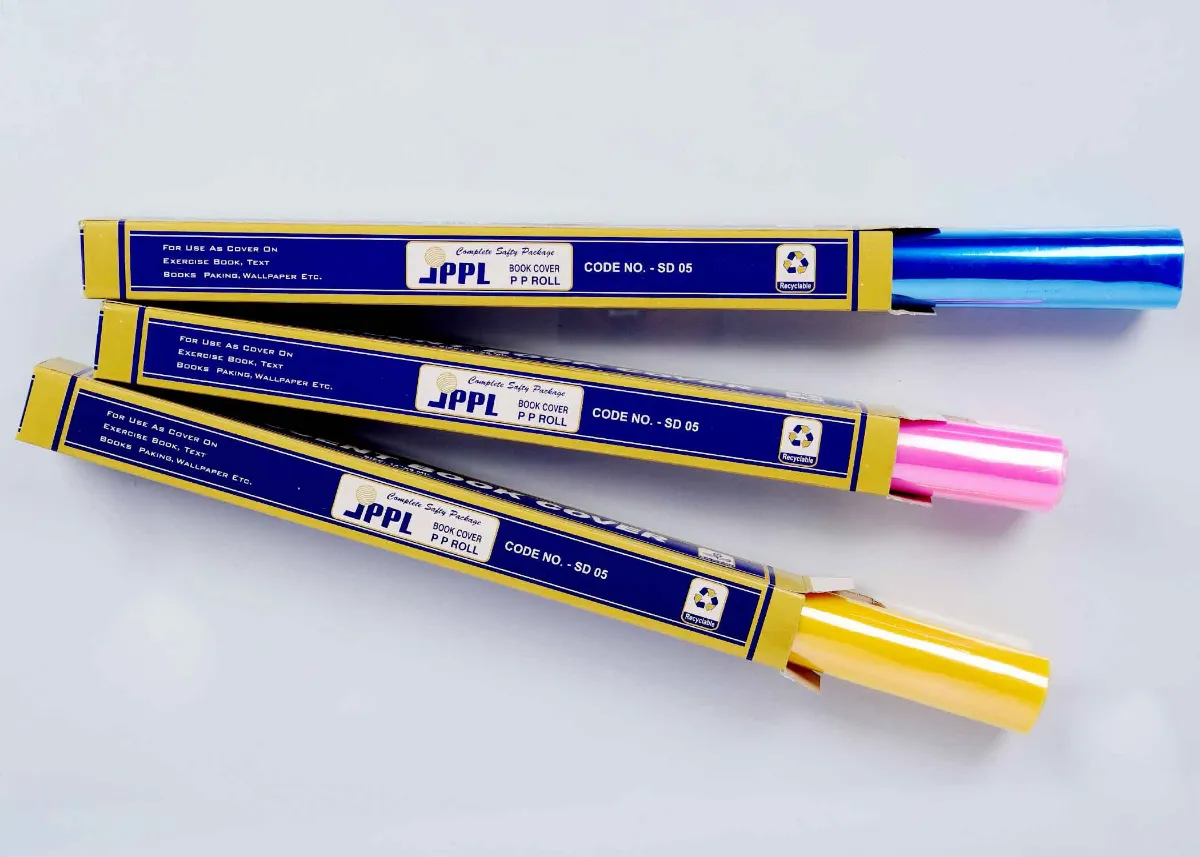
Our printed and clear BOPP covers, our Floura and Standard PP rolls and our wide Supreme covers are all 50 micron or thicker as well. The sizes and packing page has the full chart.
One thing I find telling: two of our four best sellers, Student JPPL and Unique, are our two thickest synthetic covers. That tells me the people who use covers do notice thickness.
Is there a minimum micron for book covers in India?
Yes, and it is 50 micron.
This is the clause I work to.
The Plastic Waste Management Rules, 2016, notified by the Ministry of Environment, Forest and Climate Change as G.S.R. 320(E) on 18 March 2016, set conditions in rule 4(1). Clause (d) says that "plastic sheet or like ... and cover made of plastic sheet used for packaging, wrapping the commodity shall not be less than fifty microns in thickness". The original text allowed an exception where that thickness would impair the product's function. The amendment of 6 July 2022 (G.S.R. 522(E)) narrowed it to exceptions "as specified by the Central Government".
The rule does not name book covers. I am not a lawyer, and I read cover film as plastic sheet under this clause. The government's own wording points the same way. The amendment of 14 March 2024 (G.S.R. 201(E)) makes raw material makers print a warning on every bag of plastic raw material, and that warning lists "plastic sheets < 50 micron thickness" among the items prohibited under the rules.
Two more points clear up most of the confusion in the market:
- The 75 and 120 micron numbers are for carry bags only. The amendment of 12 August 2021 (G.S.R. 571(E)) raised carry bags to 75 micron from 30 September 2021 and to 120 micron from 31 December 2022. It changed clause (c) for carry bags and left the sheet clause at fifty microns.
- States and local bodies enforce these rules and can issue their own orders. Check your own state's notifications before the season.
If you want the full story of the 2022 single-use plastic ban and where covers stand, read are plastic book covers banned in India.
Does a thicker cover last longer?
For the same film, a thicker cover is stiffer and harder to tear. On a book that goes in and out of a school bag every day, the corners and the spine take most of the wear, and that is where extra micron helps.
But thickness is not the whole story. A cover that is folded loosely will lift at the corners whatever its micron. A design matters too: Unique's embossed lining gives a textured feel that a plain film does not have.
And I am not a fan of thickness for its own sake.
A 75 micron cover uses 50% more plastic per square metre than a 50 micron cover. That is fine when the book needs it. It is a waste when it does not. A thin notebook that will be filled in two months does not need our thickest cover. A textbook that has to survive the year does.
How can I check the micron myself?
It is hard to tell 50 from 60 micron by touch. Here is what works:
- Ask for it in writing. Put the micron on your purchase order and ask your supplier to write it on the invoice. A maker who is sure of the number will not mind.
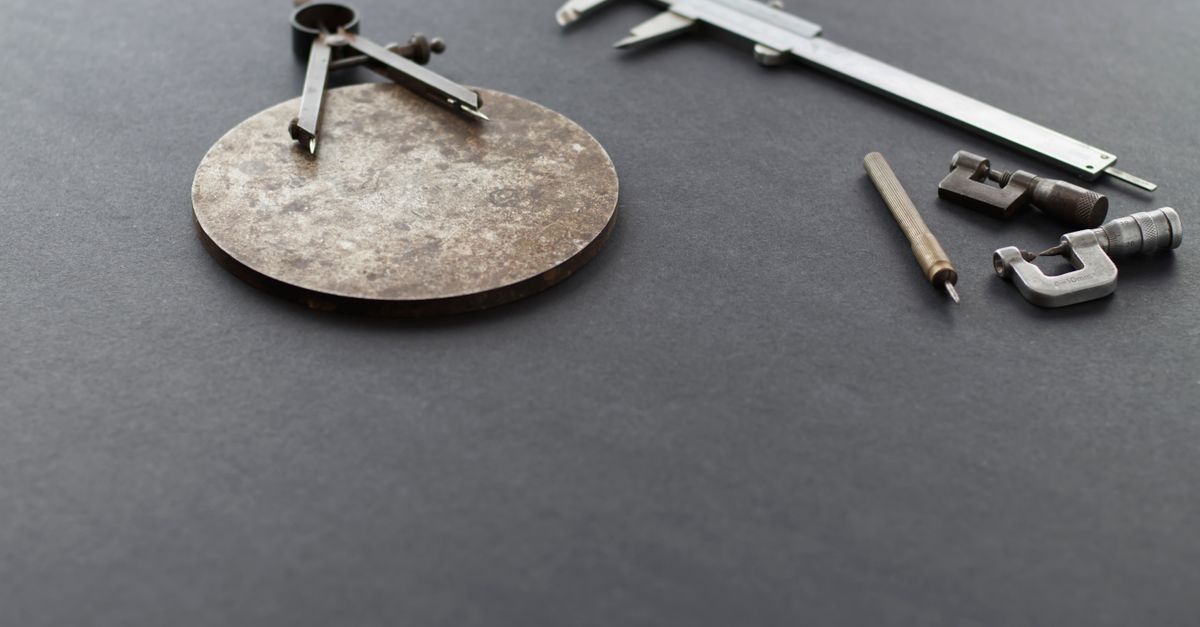
- Measure a stack with a screw gauge. Most school physics labs have one, and it reads to 0.01 mm. Cut a strip, fold it into 10 layers, press it flat and measure. Ten layers of 50 micron film read about 0.50 mm, ten of 70 micron about 0.70 mm. Measuring ten layers averages out the error of measuring one.
- Compare two rolls by weight. Take two rolls of the same film, the same width and the same length, off any paper core. If one weighs 20% less than the other, its film is about 20% thinner.
- For an embossed cover like Unique, ask the maker how the micron was measured before you test it. A gauge reads the raised pattern, and a scale reads the average.
If a cover measures well below what you were promised, send it back to the supplier with your readings. That is a fair complaint, and a good supplier will take it seriously.
What micron should a distributor stock?
Stock by the end customer, not by the number. A simple spread works for most of the shops you supply:
| Customer | What I would offer | Micron |
|---|---|---|
| Buys on price | Star, or China in packs | 50 micron and up |
| Wants a boxed cover at a middle price | Vidhyarthi or Student | 55 or 60 |
| Wants the cover to last the year | Student JPPL | 70 |
| Wants something special | Unique, embossed | 75 |
Suggest that your retailers keep the thicker covers at eye level, and give them the difference in one line: "This one is thicker, so it holds the corners better." Our synthetic book covers page shows every design in its box.
Where JPPL fits
JPPL has made packaging in Jaipur since 1997, and notebook covers are one of our main products. We make them in our own plant for stationery distributors and wholesale dealers, and we do not make any cover thinner than 50 micron for anyone.
If you are comparing quotes from different makers, compare them at the same micron. A lower price can simply mean a thinner film. Ask us for the micron of any design before you order.
Questions buyers ask
Is a 50 micron book cover good enough?
For a book that is handled gently, yes. It meets the legal floor and it does the basic job of keeping the book clean. For a book a child carries every day for a full school year, I would pick 60 micron or more.
What is the difference between micron and GSM?
Micron is thickness. GSM is weight, grams per square metre. Paper is sold by GSM. Plastic film is sold by micron, because two plastics of the same thickness can weigh differently.
Do book covers need to be 120 micron?
No. The 120 micron figure is for plastic carry bags, from 31 December 2022. The clause for plastic sheet and covers made of plastic sheet stays at 50 micron.
How thick is 50 micron in millimetres?
0.05 mm. Twenty layers of 50 micron film stacked together make 1 mm.