What is a synthetic book cover? HM film explained simply
A synthetic book cover is a plain coloured plastic cover, usually HM-HDPE film. What the name means, how it differs from BOPP and PP, and how to choose one.
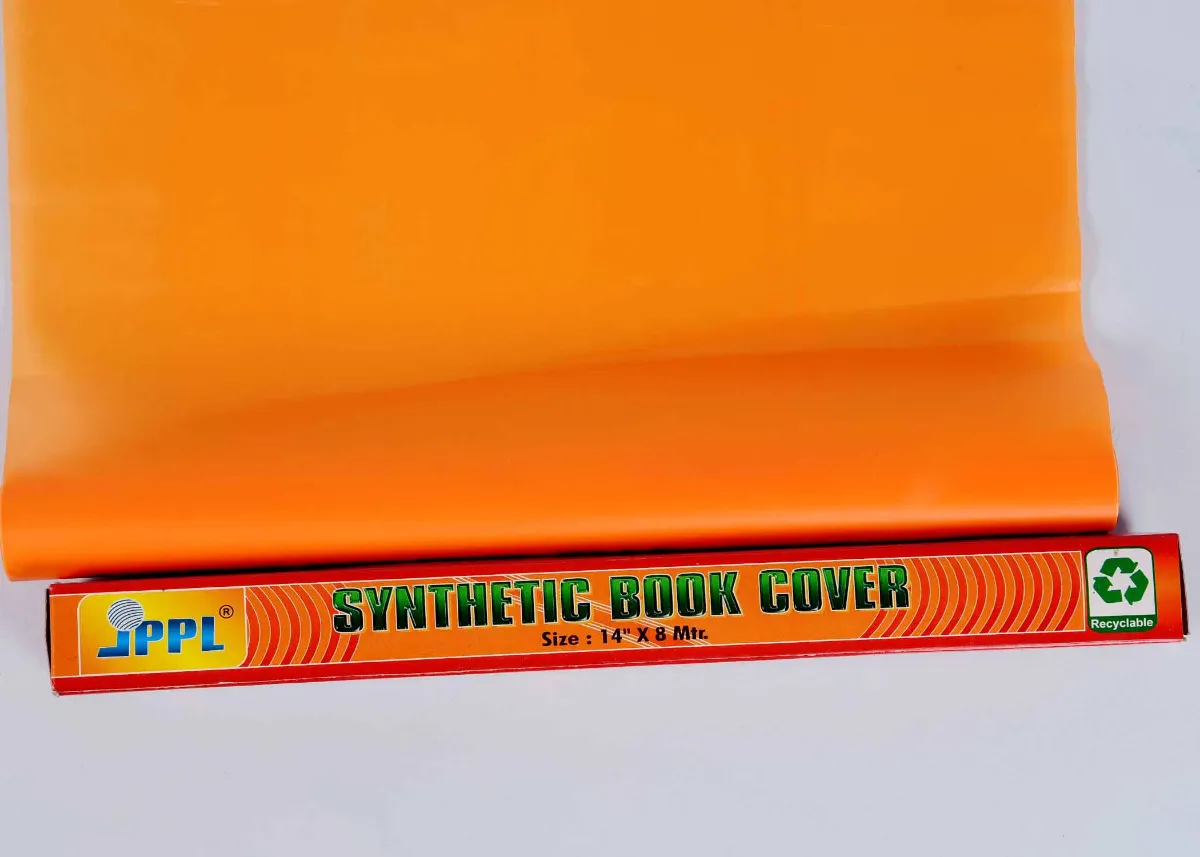
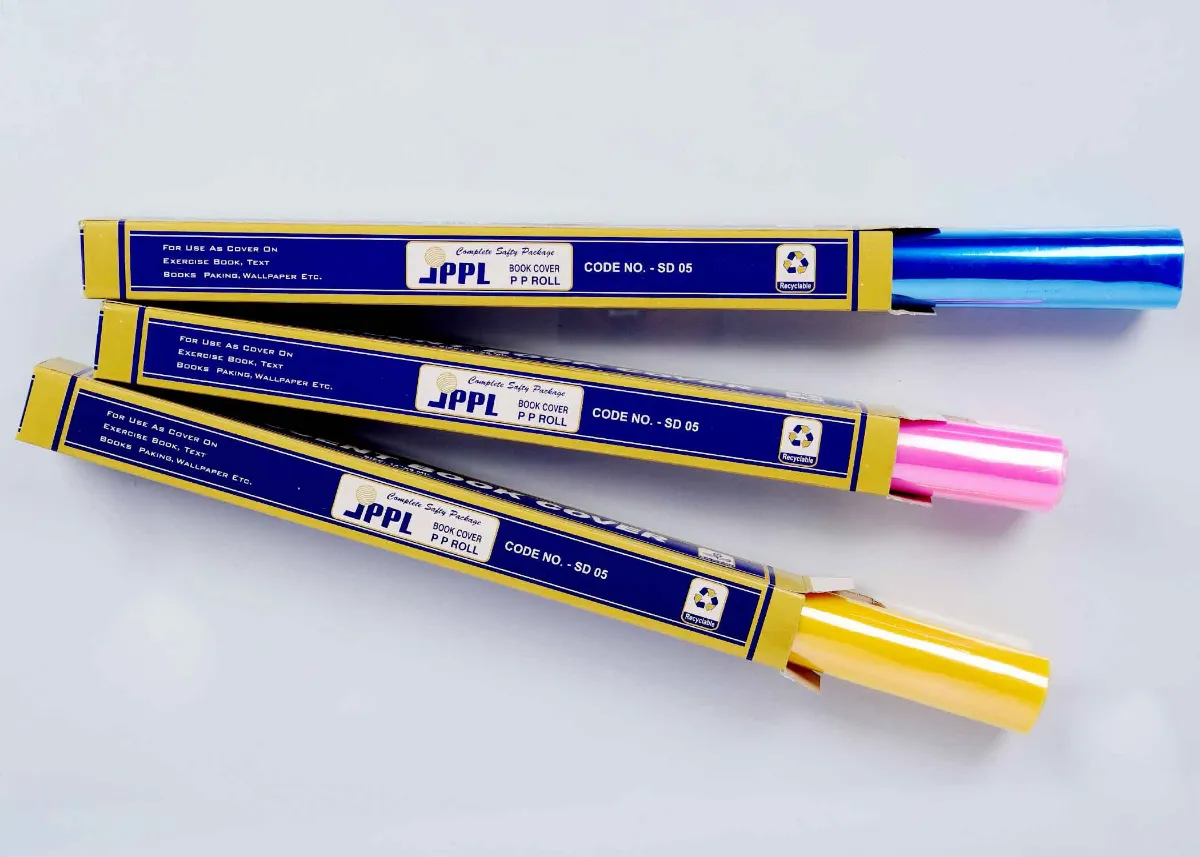
A synthetic book cover is a plain coloured plastic cover for notebooks and textbooks. Ours, at Jagannath Polymers Pvt Ltd (JPPL), are made from HM-HDPE film. It is called "synthetic" because it is a man-made film doing the job of the old brown and orange paper cover.
Ask for a "synthetic cover" in a stationery shop and you will probably be handed a roll in solid orange, brown or blue.
That is the one I am explaining here, for distributors and wholesale dealers who want to explain it to the shops they supply.
What does HM-HDPE mean?
HDPE is high-density polyethylene, one of the common plastics of the polythene family. HM stands for high molecular weight, which in simple words means the plastic is made of very long molecules. For covers, it is made into a thin, coloured film.
I like to explain it this way. Soft polythene stretches and feels limp in the hand. HM film feels closer to a sheet of thin paper. It holds a fold, it rustles when you handle it, and it comes in solid colours you cannot see through.
That paper-like feel, in my view, is why so many families accept it in place of a paper cover. They get the familiar plain look, without a cover that tears at the first wet corner.
Why is it called a synthetic cover?
"Synthetic" simply means man-made, as against a natural material. Paper is made from plant fibre. HM film is made from plastic.
That is the sense in which the trade uses the word. A "synthetic cover" is the plain coloured cover that does the paper cover's job but is not paper. We use the same name, because that is what retailers and their customers ask for at the counter.
How is a synthetic cover different from BOPP and PP covers?
All three are plastic, but they look and behave differently.
This is where most of the confusion starts.
| Film | Full name | How it looks | Our designs |
|---|---|---|---|
| HM-HDPE | High molecular weight high-density polyethylene | Solid plain colour, matte, crisp, not see-through | Star, Vidhyarthi, Student, Student JPPL, Unique, China |
| BOPP | Biaxially oriented polypropylene | Clear and glossy, takes sharp printing | Classic, Combo, Lining, Clear |
| PP | Polypropylene | Clear, see-through colours, or printed | Floura, Standard, Supreme |
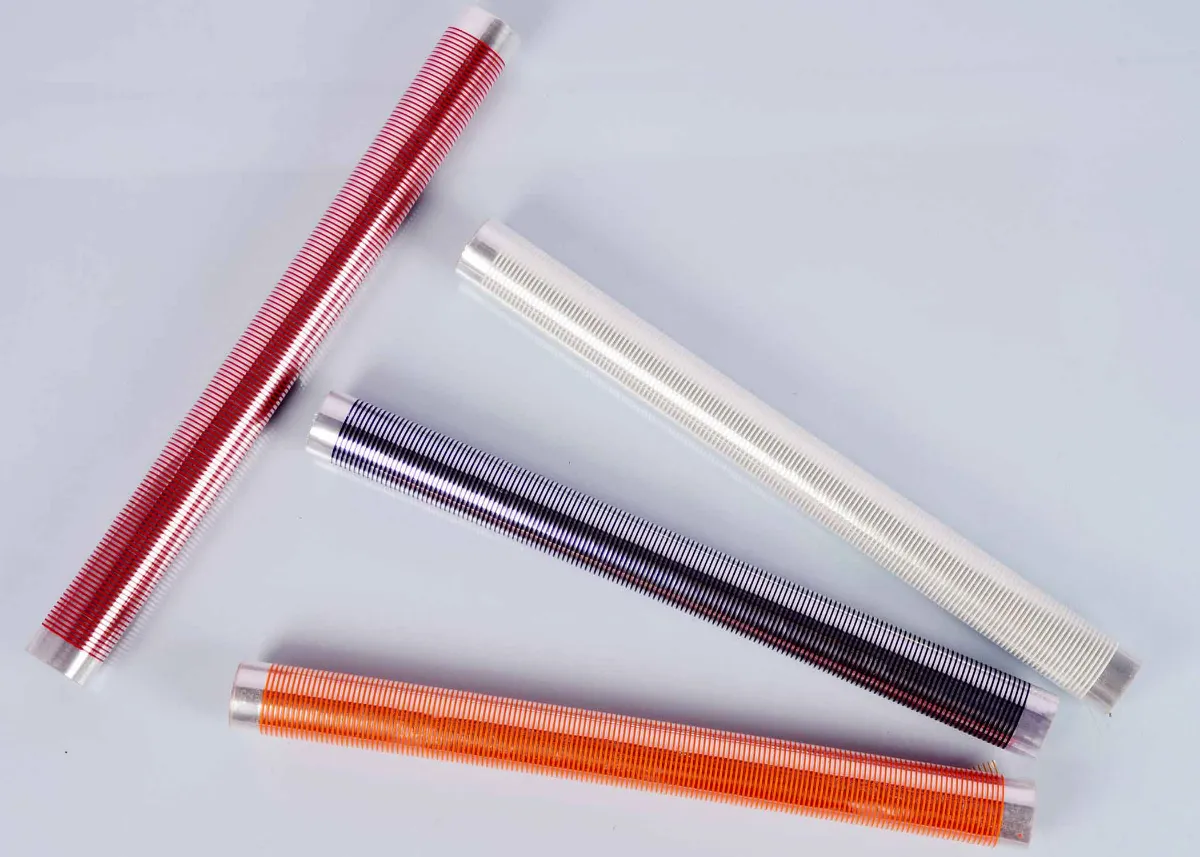
BOPP film is stretched in two directions while it is made. That is what "biaxially oriented" means. The result is a clear, shiny film, and we print our Classic, Combo and Lining designs on it.
PP is the base plastic of BOPP, used without that stretching. We use it for Floura, our natural and fluorescent design, for the Standard rolls sold by the kilo, and for the wide Supreme sheets.
HM-HDPE is a different plastic altogether, from the polyethylene family. We use it only for the plain coloured covers.
How can I tell a synthetic cover apart in a shop?
You do not need a lab. In our range, these three checks will sort it out.
- Look for print. Our printed covers (Classic, Combo, Lining and the printed Standard rolls) are BOPP or PP. Synthetic covers carry no print.
- Hold it up to the light. If you can read a page through it, it is a clear or fluorescent BOPP or PP cover. A synthetic cover is a solid colour.
- Read the box or the invoice. This is the surest check of all. A good maker names the film and the micron, and if neither is written anywhere, I would ask before buying.
What thickness should a synthetic cover be?
At least 50 micron. That is the national minimum for plastic sheets under the Plastic Waste Management Rules, 2016, as the Press Information Bureau release of 18 March 2016 explains. Every cover we make meets it.
Within our range, the thickness is what separates one design from the next.
| Design | Thickness | Notes |
|---|---|---|
| Star | 50 micron | Lightest boxed synthetic cover |
| Vidhyarthi | 55 micron | Between Star and Student |
| Student | 60 micron | The middle choice |
| Student JPPL | 70 micron | Our best seller, carries the JPPL name |
| Unique | 75 micron | Embossed lining, our thickest |
| China | 50 micron or more | No box, 3 m or 4 m packs |
The boxed ones are 14 inch (355 mm) x 8 m, one roll per box. Our synthetic book covers page shows each one with photos.
My honest advice for a school book that has to last the year is 60 micron or more.
Star at 50 micron is fine for retailers who sell on price, but a thicker film holds its corners better. Student JPPL, at 70 micron, is our best seller.
Does China mean it is imported?
No. China is simply the name of one of our designs. It is a plain HM cover made by us in our own plant in Jaipur, sold without a box in 3 m and 4 m packs.
Which colours are available?
Our standard colours are orange, pink, blue, brown, white and green. Other colours can be made to order. Orange and brown are the classic school colours. The others are handy if a family or a teacher wants one colour per subject.
Is a synthetic cover recyclable?
I will answer this carefully. A 2022 review of plastic recycling in India, published in the International Journal of Environmental Science and Technology, says HDPE is widely regarded as recyclable. That is the good news for HM film.
But a used cover is only recycled if it is collected. So at the end of the year, put old covers in dry waste, never in a drain and never in a fire.
When is a synthetic cover not the right choice?
When you want to see the book. If the school's textbook has a printed cover you want to keep visible, a synthetic cover hides it. Use a clear cover such as our Clear design, or a printed Classic cover instead.
And if you want to compare plastic with paper in one table, read paper cover vs plastic book cover.
For a family that needs only a pack or two, our sister brand PackSmith sells a pack of five 14 inch x 3 m rolls, in cartoon print or plain orange. Distributors and wholesale dealers buying by the carton can send us their colours and designs through the contact page.
Questions buyers ask
Is a synthetic book cover the same as a plastic book cover?
Yes, it is a type of plastic cover. In the trade, "synthetic" usually means the plain, coloured, non-transparent kind, made of HM-HDPE, as against clear or printed covers made of BOPP or PP.
Which synthetic cover is the thickest?
In our range, Unique is the thickest at 75 micron, with an embossed lining. Among the plain covers, Student JPPL is the thickest at 70 micron.
Is a synthetic book cover recyclable?
HDPE is widely regarded as a recyclable plastic, according to a 2022 review of plastic recycling in India. Whether a used cover actually gets recycled depends on dry waste being collected where you live.